
The MachineDocumented9
The wardrobe is rented, and that’s a real industry
$45 a month for a Chanel bag. $50 an hour for the room. $425 an hour for a jet that never leaves. The published price list for an aspirational photograph.
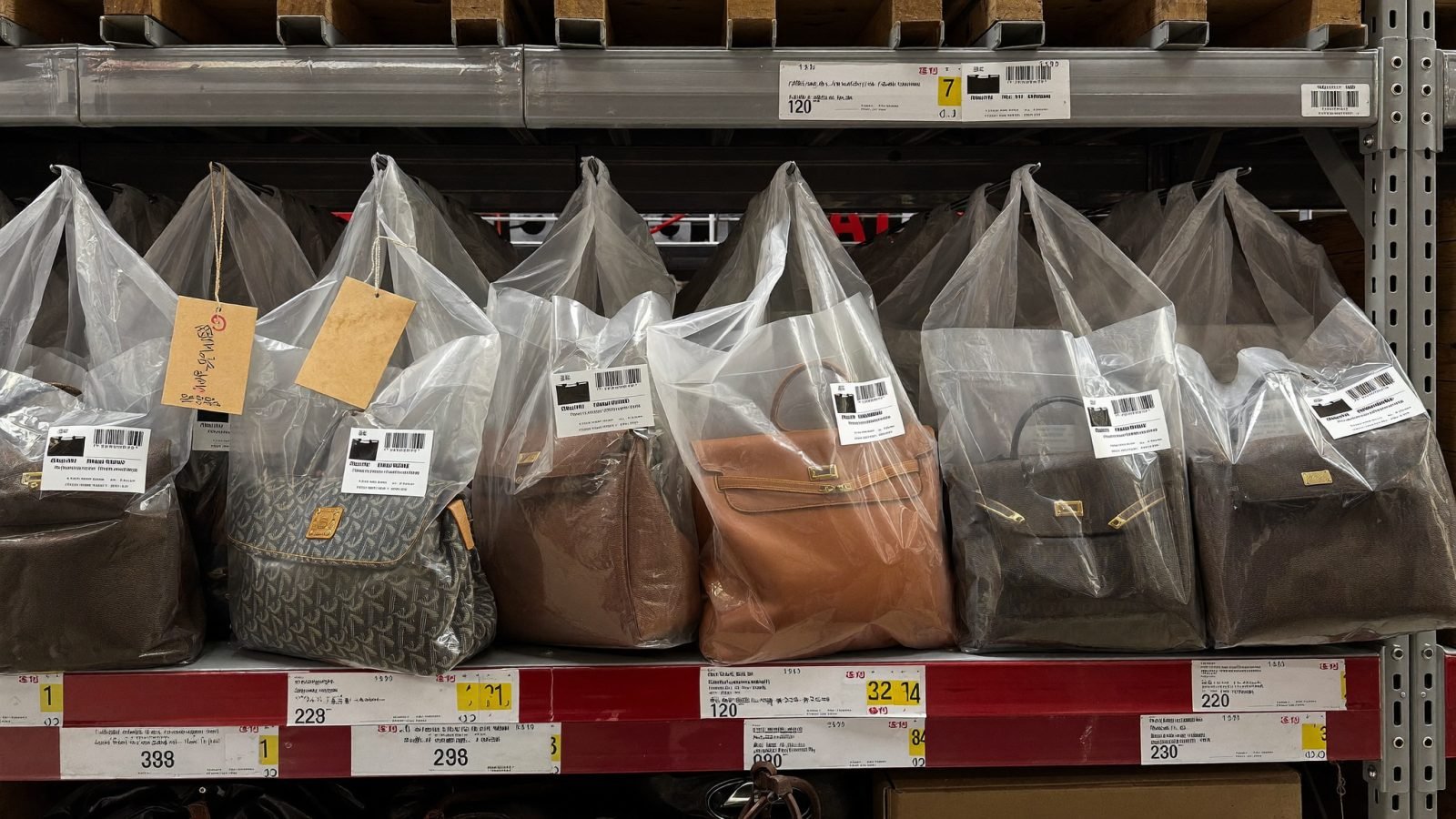
$45/month
Forty-five dollars a month gets you into the cheapest tier of Vivrelle, a members’ club that lends out handbags and jewellery from Chanel, Prada, Yves Saint Laurent and others. The top tier is $309. Somewhere in between sits the monthly cost of appearing, in photographs, to own a wardrobe you do not own.
This is not a grey market. On 3 June 2025 Vivrelle closed a $62 million Series C, funded entirely by the venture firm Protagonist. Its founder and chief executive, Blake Geffen, described the plan in the language of any scaling business: “This investment represents an exciting new chapter — enabling us to scale operations, deepen our inventory, and leverage emerging technologies, including AI.”
At the time of the raise the company was around eight years old, employed roughly 100 people, reported triple-digit growth in 2024, and was profitable. It operates physical locations including in the Hamptons and inside Four Seasons hotels, and partners with Revolve. Members can buy the items they have been renting. It had already raised a $35 million Series B and, before that, a $26 million round.
That is four disclosed rounds and a profit line. Whatever the luxury-access business is, it is not a novelty.
A crucial thing this article is not saying
Before going further, a clear statement of what is not established.
STAGED went looking for a documented case in which a specific, named influencer rented or borrowed luxury goods and presented them as owned. We did not find one. Trade coverage discusses the practice in general terms; we could not source a single verifiable individual instance.
So no names appear below, and none should be inferred. Nobody in this piece is accused of anything, because we have no evidence with which to accuse them.
What follows is narrower and, we think, more interesting: a description of a legal, funded, publicly priced supply chain whose entire output is images of a life. What people do with the images is not documented. What it costs to assemble one is documented very precisely.
The public company that proves the model
Rental fashion has a listed benchmark, which means audited numbers rather than founder assertions.
Rent the Runway reported full-year 2025 revenue of $329.8 million, up 7.7% from $306.2 million, with 143,796 ending active subscribers — a rise of 20.1% from 119,778. Fourth-quarter revenue was a record $91.7 million. The results were released on 14 April 2026.
The company also reported net income of $22.6 million against a $69.9 million loss the previous year, which sounds like a turnaround and is partly a balance-sheet event: the swing included a $96.3 million gain on debt restructuring, which is not an operating result. Cite the subscriber growth with confidence; treat the profit line with care.
The number that matters for our purposes is 143,796. That is not a niche of stylists and red-carpet bookings. That is a standing, six-figure population of people who have decided that wearing clothes is a subscription rather than a purchase — a consumption model that is entirely respectable and that also, incidentally, severs the link between what someone is photographed in and what they own.
The published cost of a luxury image
- $45–$309 per month — Vivrelle’s four membership tiers for handbags and jewellery
- $62 million — Vivrelle’s Series C, 3 June 2025, funded entirely by Protagonist; following a $35M Series B and an earlier $26M round
- $329.8 million / 143,796 subscribers — Rent the Runway FY2025 revenue and ending active subscribers, reported 14 April 2026
- $55–$90 per hour — Peerspace’s own stated average for photo-shoot venue listings (platform marketing figure)
- $45–$120 per hour — range across named Peerspace examples: NYC 753 sq ft at $45, Seattle at $57, Austin at $100, an LA two-storey mid-century studio at $120
- $425–$750 per hour — a real grounded Gulfstream III in Los Angeles, for photo and video shoots
- Not published — Lion Heart Lifestyle’s rates for cars, yachts and jets; enquiry only
The room is the second line item
A handbag needs somewhere to be photographed, and that market is priced too.
Peerspace states that listings on its platform average $55 to $90 an hour. That is the platform’s own marketing figure and should be read as such — it is a company describing its inventory to prospective customers. The individual listings it names are verifiable, and they bracket the average sensibly: a two-storey mid-century studio in Los Angeles at $120 an hour with a two-hour minimum; a downtown Austin studio at $100; a Seattle studio at $57; a 753 sq ft New York studio at $45 with a two-hour minimum. Around 600 square feet runs roughly $50 an hour.
Peerspace is also actively recruiting supply from the other direction. It publishes a guide titled “How to Rent Your Home for Photoshoots” — an invitation to homeowners to convert a kitchen island into a location fee. The aesthetic of aspirational domestic photography is, increasingly, other people’s houses, hired by the hour.
At the upper end of the same logic sits the aircraft. A genuine grounded Gulfstream III in Los Angeles publishes photo and video shoot rates of $425 to $750 an hour, tiered by booking length. It is the same transaction as the $45 studio: a room, an hour, an invoice.
The props business says the quiet part in its navigation bar
The clearest evidence that this supply chain is aimed at image production is not analysis. It is a menu item.
Lion Heart Lifestyle, in Los Angeles, maintains a page headed “Models & Influencers”. It offers exotic cars — Lamborghini, Ferrari, Rolls-Royce, Mercedes — along with private jets “for aerial shots” and luxury yachts. The copy promises to “elevate your photoshoots” and to “make every shot a stand-out attraction”, serving Beverly Hills, Santa Monica and Malibu.
Note what the offer is. Not transport. Not a driving experience. Shots.
Note also what the page does not contain: prices. Rates are by enquiry only. That is a legitimate and common arrangement for high-value assets, and it is also a structural fact worth recording — the cheapest tier of this economy publishes its rates to the cent, and the most expensive tier publishes nothing at all. Everything we can quote about the top of this market comes from vendors choosing what to tell us.
Which is a good moment for a related admission. We wanted an hourly supercar rate for this piece and could not responsibly produce one. Every figure that surfaces comes from a rental company’s own marketing page, with ranges wide enough to be useless. If you see a confident number for what a Lamborghini costs per hour, ask where it came from.
What the existence of the industry does and does not imply
Assemble the published prices and you can build a fully costed aspirational photograph out of legitimate invoices: $45 a month for the bag, roughly $50 to $120 an hour for the room, a quoted figure for the car, and — if the budget stretches — $425 an hour for the aeroplane that does not fly anywhere.
None of that is fraud. Renting is not lying. A styled photograph is not a sworn statement, and a rented handbag in a hired studio is exactly as legitimate as a rented tuxedo at a wedding. The industry is licensed, funded, taxed and — at least at the consumer end — priced in public.
Here is the inference that the evidence actually supports, and it is a modest one. A supply chain of this size does not exist without demand of a matching size. Rent the Runway alone has 143,796 active subscribers. Vivrelle raised $62 million in a single round from a single investor. Somebody is booking the studios and Peerspace is recruiting more of them.
The consequence is epistemic rather than moral. Once access to luxury goods can be bought by the month and rooms by the hour, a photograph stops being evidence of ownership. It never really was, but the gap has widened from something a determined person could arrange to something anyone with a card can subscribe to for less than a gym membership.
That is not a scandal. It is a market working normally, and the only people materially misled by it are the ones still reading photographs as balance sheets.
Sources
- Vivrelle closes a $62M Series C, 3 June 2025
- Yahoo Finance on Vivrelle's tiers, scale, locations and partnerships
- Business of Fashion on Vivrelle's $35M Series B
- Retail Dive on Vivrelle's earlier $26M round
- Rent the Runway Q4 and full-year 2025 results, released 14 April 2026
- Peerspace's own figures for photo-shoot venue rental costs
- Peerspace's guide to renting your home for photoshoots
- Lion Heart Lifestyle's 'Models & Influencers' page (no rates published)
- Published photo/video shoot rates for a real grounded Gulfstream III in Los Angeles
More from this section

The MachineDocumented12
The $35-an-hour private jet
A plywood fuselage in Boyle Heights rents for less than dinner. A real grounded Gulfstream costs twelve times more. The economics of…
The MachineDocumented7
Who pays for the candid photo
A publicist says he paid a star $50,000 for a couple of street shots. A declared sponsored post from the same tier…

The MachineDocumented12
The disclosure rules everyone is breaking
$53,088 per violation, a 5-0 vote, more than 700 companies already on notice - and, so far, not a single penalty judgment…